
Pathways to School and Kura
31 July 2026

When we first become parents, that first day of school or kura can feel a long way off. For many of us, it isn't until our child turns four, or is approaching their fifth birthday, that we start thinking about what "being ready" for school really means.
When children start school or kura, it isn't their ability to recite the alphabet or count to 20 that matters most. What many schools and kura across Aotearoa New Zealand value most are independent children who are curious, confident, able to communicate, build relationships, ask questions, and persist when things become challenging.
These are the skills that help children engage with learning, adapt to new experiences, and thrive in a school environment. In other words, to set children up for success in a school environment we need to focus less on 'what' to learn and more on 'how' to learn.
Why learning how to learn matters
The world our children are growing up in is changing rapidly. Many of the jobs and industries that exist today look very different from those of previous generations, and new technologies continue to reshape the way we live, work, and access information.
While facts can be found in seconds, skills such as critical thinking, problem solving, communication, collaboration, adaptability, and a willingness to keep learning remain just as important as ever.
These are the skills that help children navigate change, build relationships, and respond confidently to new challenges throughout their lives.
The exciting part is that many of these skills are built through something that children do naturally every day: play.
To adults, play can sometimes look like children are just having fun. In reality, play is where some of the richest learning takes place. Through play, children test ideas, solve problems, experiment, communicate, negotiate, and make sense of the world around them.
How can you support your child's transition?
You don't need to recreate a classroom at home to help your child prepare for school or kura.
In fact, some of the most valuable learning happens during everyday moments. For example, when your child is swinging on monkey bars they are developing gross motor skills and strengthening muscles that will help them to sit for longer periods of time and have the hand strength needed to be able to hold a pencil. Learning experiences such as art, playdough, sand and water play are all fantastic ways to further strengthen hand muscles and hand eye coordination skills - very important for when they are ready to begin learning to write.
Here are some simple ways you can further support your child's transition to school skills at home:
- Reading together regularly provides opportunities for your child to explore new ideas, introduces new vocabulary and supports their creativity and imagination. Reading to your child also helps them to understand how stories work, strengthens their attention and concentration, and creates opportunities to talk about ideas, feelings, and experiences. These skills help children feel more confident and prepared for the routines, learning, and social interactions they will encounter when they start school.
- Having rich conversations and asking open-ended questions is a powerful way to support your child's learning. Questions such as “What do you think will happen next?” or “Why do you think that?” encourage children to think deeply, share their ideas, and build their vocabulary. These conversations help develop communication, problem solving, and critical thinking skills.
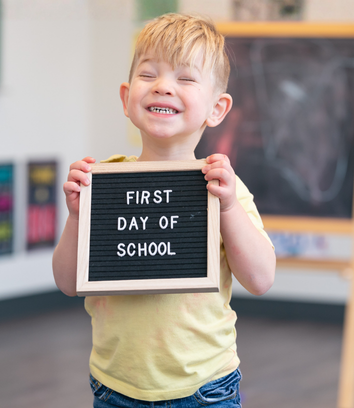
- Encouraging problem-solving before stepping in to help. This is an important way to build the skills your child needs for a successful transition to school. Giving your child time to think, try different approaches, and work through challenges helps develop resilience, independence, and confidence in their own abilities.
-
Supporting your child to be independent with tasks such as getting dressed, packing their bag, and caring for their belongings. When you encourage your child to do things for themselves, they build confidence, responsibility, and a sense of capability. Practicing everyday routines at home will helps children become more organised and independent, making it easier for them to manage the expectations of the school environment.
These experiences may seem simple, but they are incredibly powerful learning opportunties that will help support your child as a lifelong learner.The Evolve Promise
At Evolve Education, this understanding sits at the heart of our transition to school and kura framework, Huarahi whai wahi. We know that the skills children need to thrive at school aren't just developed in the months before they start, they're built gradually through everyday experiences with people, places and things.
We view transition to school or kura as a journey that begins in infancy. This is why Huarahi whai wahi is woven through all of our learning environments, including those for children under two years of age. Every child is recognised as a competent and confident learner, and we promise to foster their development of knowledge, skills, attitudes, and dispositions that support a love of learning from the very beginning.
No two children begin school or kura in exactly the same way. Some will be eager to jump straight into new experiences, while others may take a little longer to settle into unfamiliar routines.
What matters most is not whether a child can already complete school work, but rather that they feel secure, supported, and ready to engage with the opportunities ahead of them.
When children develop curiosity, confidence, resilience, communication skills, and a love of discovery, they are well equipped for the next stage of their journey as life long learners

Learning to Problem-Solve through Junk Play
What if everyday household items could become powerful learning tools for your child? Junk play transforms simple materials such as cardboard boxes, lids, tubes and fabric scraps into opportunities for creativity, critical thinking and imaginative play. In early childhood education, junk play helps children develop problem-solving, communication, collaboration and fine motor skills while encouraging curiosity and independent learning. Discover why this open-ended play experience is so valuable for children's development and how you can support learning through play at home and in your local Evolve Education early learning centre.
Read more

Raising Creative and Innovative Problem Solvers
Young children are natural problem solvers, using creativity, curiosity and trial-and-error to explore the world around them. At Evolve Education, we intentionally nurture these skills through play-based learning, encouraging tamariki to think independently, embrace challenges and develop confidence, resilience and critical thinking. By supporting children to explore, experiment and discover their own solutions, we lay the foundation for lifelong learning in an ever-changing world.
Read more

Navigating Big Emotions
Big emotions are a normal part of childhood, but they can feel overwhelming for both children and the adults supporting them. In this article, we explore why children experience emotional outbursts, how brain development influences behaviour, and practical ways parents and caregivers can respond with calm, connection and confidence. From understanding "flipping the lid" to simple breathing games that help children regulate their emotions, you'll find supportive strategies to help your child navigate big feelings and build emotional resilience.
Read more